
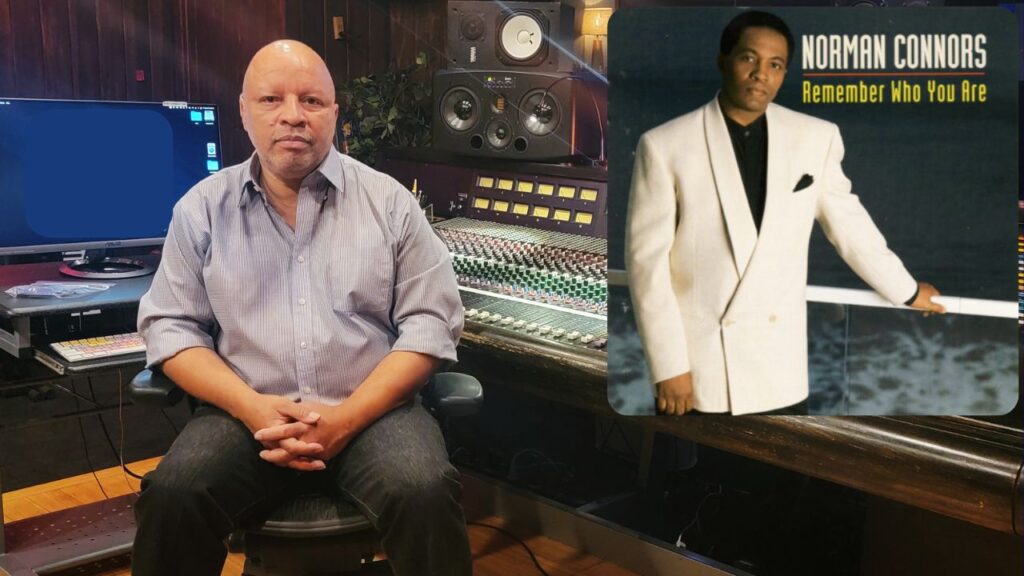
Former Motown Hitsville Staff Engineer & Norman Connors Recording Engineer
Some engineers chase trends.
Others are shaped inside institutions where excellence was not optional.
Ralph Sutton Norman Connors, recording engineer and former Motown Hitsville staff engineer, began his professional recording career as a staff engineer at Motown Hitsville Los Angeles (MoWest), serving from November 1981 through 1987. At just 21 years old, he was entrusted with recording major artists and producers whose standards were uncompromising.
That foundation would shape a decades-long career capturing live Jazz, Funk, R&B, and Soul musicians with depth, clarity, and emotional precision.
Among his most significant collaborations was with Norman Connors, one of the most influential Jazz drummers and producers of his era. From the 1980s through the early 2000s, Sutton worked closely with Connors, recording sessions built around live musicianship and dynamic interaction.
Because recording live music is different.
You are not assembling sounds.
You are documenting moments.
And when those moments are missed, they cannot be recreated.
This 4K interview, recorded in connection with BET’s Unsung, offers insight into Sutton’s journey, recording philosophy, and longtime collaboration with Norman Connors.
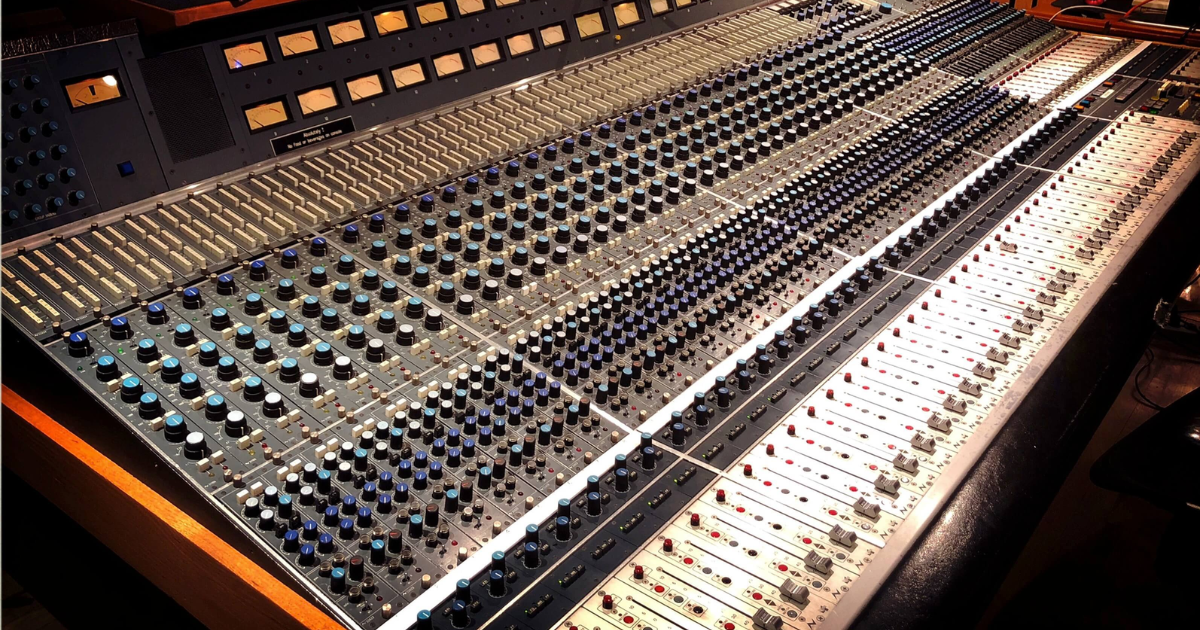
Former Motown Hitsville Los Angeles (MoWest) Staff Engineer
Before working extensively with Jazz and R&B artists throughout the 1980s, 1990s, and early 2000s, Ralph Sutton’s foundation was forged inside Motown Records’ Los Angeles facility, Motown Hitsville Los Angeles (MoWest).
Serving as a staff engineer from November 1981 through 1987, Sutton entered an environment where excellence was expected, not negotiated.
It was not a casual learning space.
It was a proving ground.
Sessions moved quickly. Expectations were high. Mistakes were not tolerated.
Inside those walls, Sutton developed the instincts that would define his career:
• Capture the performance, not just the sound
• Maintain technical control without interrupting creativity
• Respect the artist’s vision while protecting the integrity of the recording
Working in an environment shaped by Berry Gordy meant standards were institutional, not optional.
The studio was equipped with large-format analog consoles, including Neve systems with NECAM automation that required hands-on discipline, gain staging precision, and early digital recall awareness.
This was not preset-driven engineering.
It was performance engineering.
That training became the bedrock of Sutton’s approach to recording live musicians.
Because at Motown, records were not assembled.
They were performed.
Recording Norman Connors (1980s–2000s)
A long-term collaboration built on live musicianship, trust, and disciplined recording environments.
As Norman Connors recording engineer, Sutton’s role extended beyond technical operation to creative translation.
Following his tenure at Motown Hitsville, Los Angeles, Ralph Sutton continued building a career centered on live ensemble recording.
His collaboration with Norman Connors spanned approximately fifteen projects across Los Angeles and New York, extending from the 1980s through the early 2000s.
Connor’s productions relied on real musicians:
Stanley Clarke
Ricky Lawson
Branford Marsalis
Paul Jackson
Paulinho da Costa
Marion Meadows
These were sessions built on interaction, not programming.
When a rhythm section plays together in a room, the bleed becomes part of the glue. The drummer’s touch influences the bass player. The piano reacts to the vocalist. The room itself becomes part of the instrument.
Those moments cannot be fixed later.
They must be captured correctly as they happen.
Trust between artist and engineer develops over years, not sessions. Sutton’s longevity with Connors reflects consistency, reliability, and the ability to create a safe, creative environment where artists can perform freely.
That remains his superpower:
Recording live Jazz, Funk, R&B, and Soul musicians with clarity, depth, and emotional precision.
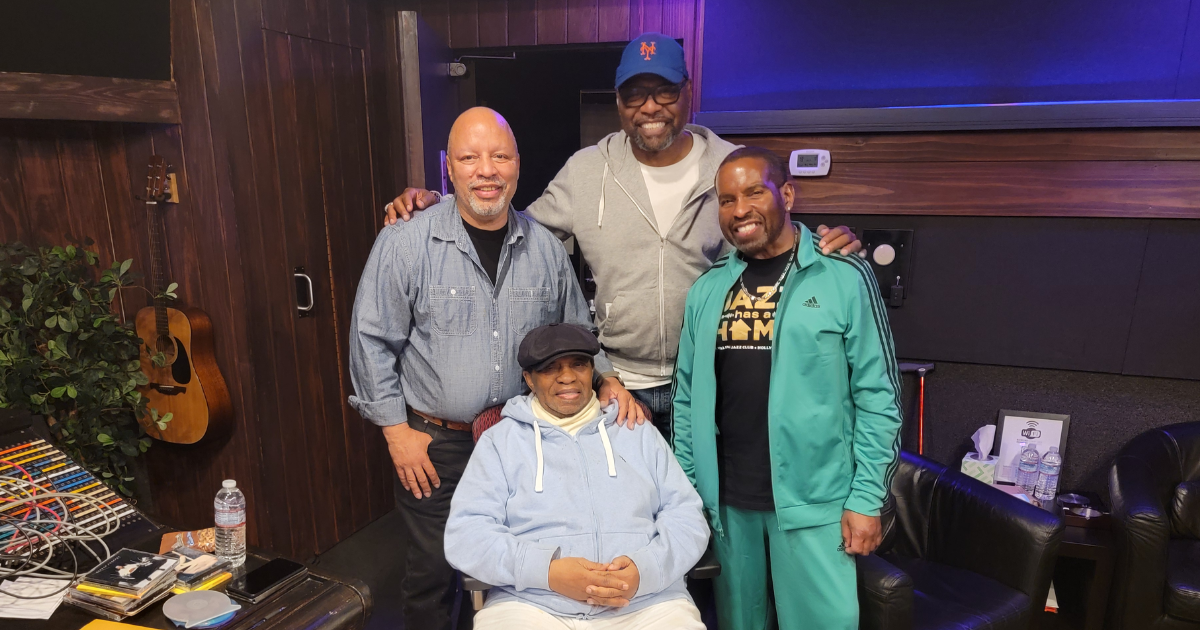
BET Unsung Interview Full Transcript
In this 4K interview recorded in connection with BET’s Unsung, Ralph Sutton reflects on his journey from Motown staff engineer to longtime recording collaborator with Norman Connors.
The conversation provides insight into the discipline required to capture live musicians at the highest level, and the philosophy behind preserving performance rather than manufacturing sound.
Below is the full transcript, lightly edited for clarity and readability.
Transcript
Interviewer:
Mr. Sutton, how would you describe Mr. Norman Connors’ sound?
Ralph Sutton:
One of the fun things about doing recording sessions with Norman is that he’s like a great team captain, almost like a coach.
He brings in some of the best musicians, Stanley Clarke, Ray Parker, Paul Jackson, Bobby Lyle, and he gives them his original idea. Then he allows them to take it to their creative next level.
With vocalists like Phyllis Hyman or Jean Carne, it’s similar. They receive the lyric, go over the song, and then he lets them interpret it based on their natural, well-practiced gift.
Interviewer:
Talk about Norman’s superpower, his ability to discover and curate vocalists over so many decades.
Ralph Sutton:
It’s one of the most phenomenal things.
We all hear great singers, but Norman somehow discovers people who are so unique and so special, like Phyllis Hyman, Jean Carne, Adaritha (Ada Dyer), and Spencer Harrison.
When you listen to Phyllis Hyman, it’s hard to even describe how her voice makes us feel. Or Jean Carne, the way their voices impact us musically.
There’s something about the human voice. Out of all the instruments in the spectrum, the human voice is the only one you must be born with.
You can learn any other instrument. But the voice you must be born with, that vocal cord structure that resonates with people.
Interviewer:
Take me back to when you first met Norman Connors.
Ralph Sutton:
I met Norman in the 1980s. I can’t remember the exact first record.
We worked with Gabrielle Goodman, Spencer Harrison, Angela Bofill, and Peabo Bryson. We recorded in Los Angeles and in New York, especially with Phyllis Hyman. Altogether, it was about fifteen records.
Interviewer:
Tell me about Spencer Harrison and “I Am Your Melody.”
Ralph Sutton:
Very few people have a tenor/baritone voice that is as smooth and natural.
That was simply his voice. He didn’t create it; he was born with it.
Sometimes, low tenor or baritone voices can feel heavy because they sit so low. But Spencer’s voice was unique, clean, and unencumbered.
That record resonated deeply, especially with Quiet Storm audiences and Black music listeners in certain cities.
What people respond to is the musicianship, the story, and the delivery.
On that record, we had Stanley Clarke, Ricky Lawson on drums, Branford Marsalis on saxophone, Marion Meadows, Paul Jackson, and Paulinho da Costa.
Those musicians made the record come alive.
The musicianship, the story, and the vocal delivery are what attract the listener.
Interviewer:
Tell me about Gabrielle Goodman and “You’re My One and Only Love.”
Ralph Sutton:
Norman discovered another wonderful vocalist with a clean, pure voice.
She interpreted the lyric in a way that pulls the listener in. It makes you want to listen because of how she sounds and how she delivers the story.
Gabrielle is another incredible vocalist.
Interviewer:
Tell me about Phyllis Hyman and “Remember Who You Are.”
Ralph Sutton:
Phyllis was very fun, and we had a strong engineer-artist relationship.
She was extremely comfortable with me. That comfort allows an artist to do what they do best.
The engineer-artist relationship is intimate and private. The artist must feel safe enough to express themselves fully.
My role is to be a techno-artistic interpreter of sound, almost like part of the equipment itself.
Her passing was impactful. We spoke regularly, and when she transitioned, it was difficult to process.
Interviewer:
What explains Norman Connors’ longevity?
Ralph Sutton:
Norman knew early on what he wanted to do.
He grew up around jazz musicians in Philadelphia and always wanted to be a drummer and percussionist.
When someone has a goal and stays committed to it, it’s like a ship with a rudder; you stay on course.
Norman always knew he wanted to be a great musician and to discover talent for the world to hear.
Interviewer:
Tell me about Norman’s style, the scarves, the hats.
Ralph Sutton:
That’s Norman.
He’s debonair. He has a specific style that makes him feel creative.
The scarves, the mohair, the cashmere that’s part of his identity and creative process.
Ralph Sutton (Closing Reflection):
The legacy of Norman Connors is the discovery of fresh, rare talent with longevity.
He had the ear, the eye, and the ability to guide how artists presented themselves musically.
Recording Live Jazz, Funk & R&B Musicians The Approach
Ralph Sutton’s career has been shaped by one consistent principle:
Capture the performance as it happens.
From his years inside Motown Hitsville, Los Angeles, to decades of recording sessions with Norman Connors and other Jazz, Funk, and R&B artists, Sutton developed a recording philosophy rooted in preparation, discipline, and musical sensitivity.
Recording live musicians is fundamentally different from constructing tracks inside a workstation.
When a rhythm section is playing together in a room, the bleed becomes part of the glue. The drummer’s touch influences the bass player. The piano responds to the vocalist. The room itself becomes part of the instrument.
Those interactions cannot be programmed.
They must be understood and preserved.
Sutton approaches each session with a performance-first mindset:
• Microphones placed with intention before the first note
• Gain staging set to protect dynamics, not flatten them
• Musicians positioned to see and feel one another
• Engineering presence that supports, not interrupts creativity
His philosophy remains simple:
The artist must feel safe.
Because when artists feel safe, they perform freely.
And when they perform freely, records transcend production trends.
This performance-centered approach developed in analog environments and refined through decades of live ensemble recording naturally extends into modern workflows, including high-resolution digital production and immersive audio formats.
The tools evolve.
The discipline remains.
Recording, Mixing & Dolby Atmos Services
While Ralph Sutton’s foundation was built inside large-format analog consoles and live rhythm section sessions, his current workflow integrates modern digital systems, including Dolby Atmos immersive audio.
Dolby Atmos is not simply about placing sound in three-dimensional space.
It requires an understanding of how musicians interact in a room, how dynamics breathe across sections, and how emotional intent translates spatially.
Engineers whose backgrounds are rooted in loop-based production often approach immersive mixing as movement.
Engineers trained in live musicianship approach immersive mixing as an extension.
Because when you understand how a rhythm section locks together in real time, immersive translation becomes about preserving interaction, not manufacturing motion.
Sutton’s decades of recording live Jazz, Funk, R&B, and Soul musicians uniquely position him to:
• Mix in stereo with dynamic integrity
• Translate ensemble recordings into Dolby Atmos
• Reimagine legacy analog recordings for immersive release
• Consult with artists and labels preparing immersive projects
Artists with recordings originally tracked in analog environments often face a critical question:
How do you preserve the emotional integrity of the original performance while expanding the sonic landscape?
That requires both historical sensitivity and modern technical fluency.
Sutton bridges both worlds.
For serious artists, producers, and labels seeking disciplined recording, emotionally intelligent mixing, or immersive reimagination of catalog material, additional information is available on the following pages:
• Recording Engineering Services
• Mixing Services
• About Ralph Sutton
• Discography
The standards established inside Motown’s Los Angeles studio continue forward.
The medium evolves.
The commitment to capturing and translating performance remains the same.